C. S. Diko †, H.D. Shi †, W. Lei, Z.C. Zhu, Y.N. Liu, M. Abitonze, W. M. M. Obono, Y.M. Zhu *, Y. Yang *, Z.-S. Wu and J. Liu *
Nanoscale Advances, 2025, 7.
DOI: 10.1039/D5NA00772K [PDF]
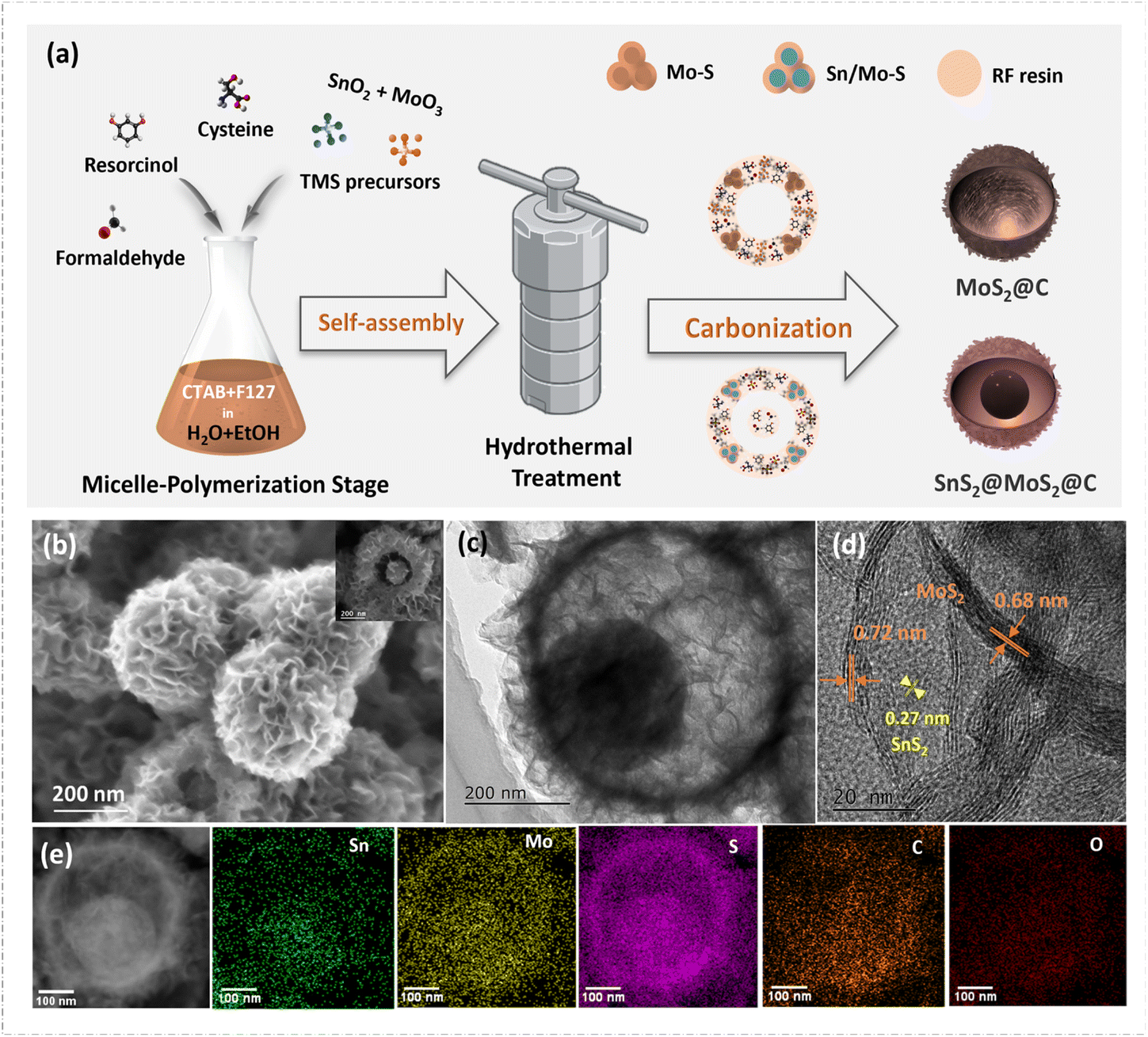
Lithium–sulfur (Li–S) batteries are promising candidates for future energy storage systems because of their abundant theoretical capacity and low cost. However, challenges such as polysulfide shuttle effects and poor conductivity hinder their practical use. Yolk–shell structured nanocomposites offer a promising avenue for addressing the challenges in Li–S batteries. Herein, one-pot hydrothermal synthesis of yolk–shell SnS2@MoS2@C nanospheres is reported, where the inclusion of the tin precursor plays a pivotal role in tuning these unique nanostructures. The resulting architecture provides enlarged interlayer spacing, internal voids, and robust stability, facilitating efficient ion transport and volume buffering. Electrochemical evaluations reveal a high initial capacity of 1445 mA h g−1 at 0.1C, with excellent rate-performance, retaining 802 mA h g−1 at 3C. Remarkably, at 1C, the capacity increases from 1044.8 to 1114.6 mA h g−1 after 600 cycles. These results highlight the structural and functional advantages of SnS2-driven yolk–shell architectures for next-generation Li–S cathodes.


