S.S. Yuan, Z.C. Xu, H.N. Du, X. Wang, Y.P. Xie *, F.Y. Cheng * and Z.-S. Wu *
Advanced Energy Materials, 2026, accepted.
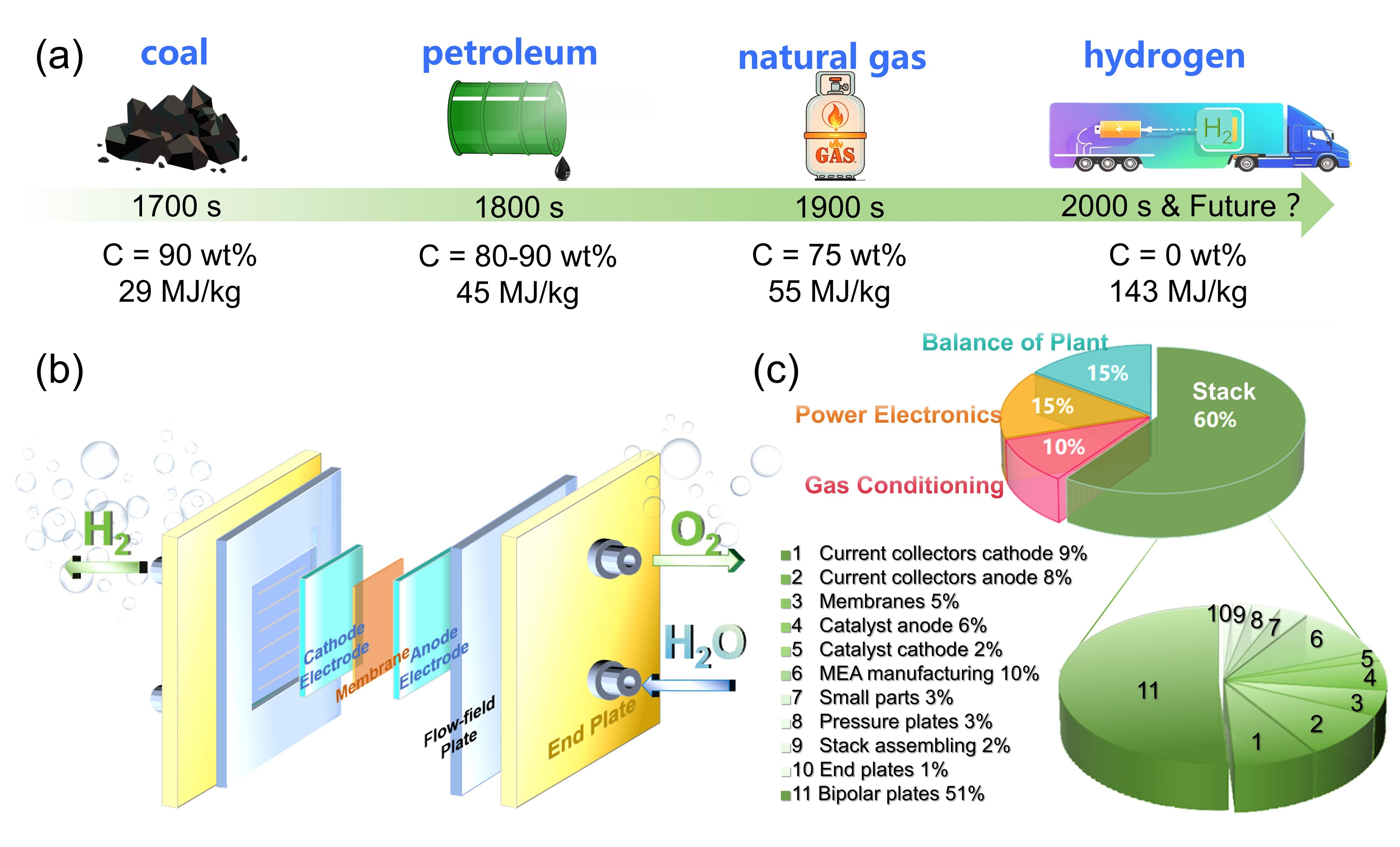
Proton exchange membrane water electrolysis (PEMWE) is a promising technology for green hydrogen production due to its high efficiency, compact design, and flexible operation. However, the reliance on noble metal-based anode catalysts significantly increases hydrogen production costs. Transition metal oxides have emerged as cost-effective alternatives because of their diverse compositions and tunable structures, attracting increasing research interest. This review summarizes recent advances in transition metal oxide for the acidic oxygen evolution reaction (OER), with a particular focus on systems beyond pure IrO2, RuO2, and their mixtures. Fundamental OER mechanisms, including the adsorbate evolution mechanism, lattice oxygen mechanism, and oxide pathway mechanism, are introduced, with emphasis on their roles in regulating catalytic activity and stability. Representative catalyst systems such as spinels, perovskites, pyrochlores, dioxides, and high entropy oxides are systematically reviewed, highlighting performance enhancement strategies including heterostructure construction, elemental doping, and defect engineering. Emerging concepts such as reaction pathway engineering, corrosion suppression, and dynamic structural stability are discussed as effective approaches to overcoming the trade-off between activity and stability. Finally, current challenges and future perspectives are outlined, emphasizing the important role of artificial intelligence in catalyst screening, characterization optimization, large-scale synthesis, and the establishment of standardized industrial evaluation systems, thereby promoting the practical application of advanced transition metal oxide catalysts for acidic OER in sustainable hydrogen energy technologies.


