J.X. Ma and Z.-S. Wu *
National Science Review, 2026, accepted.
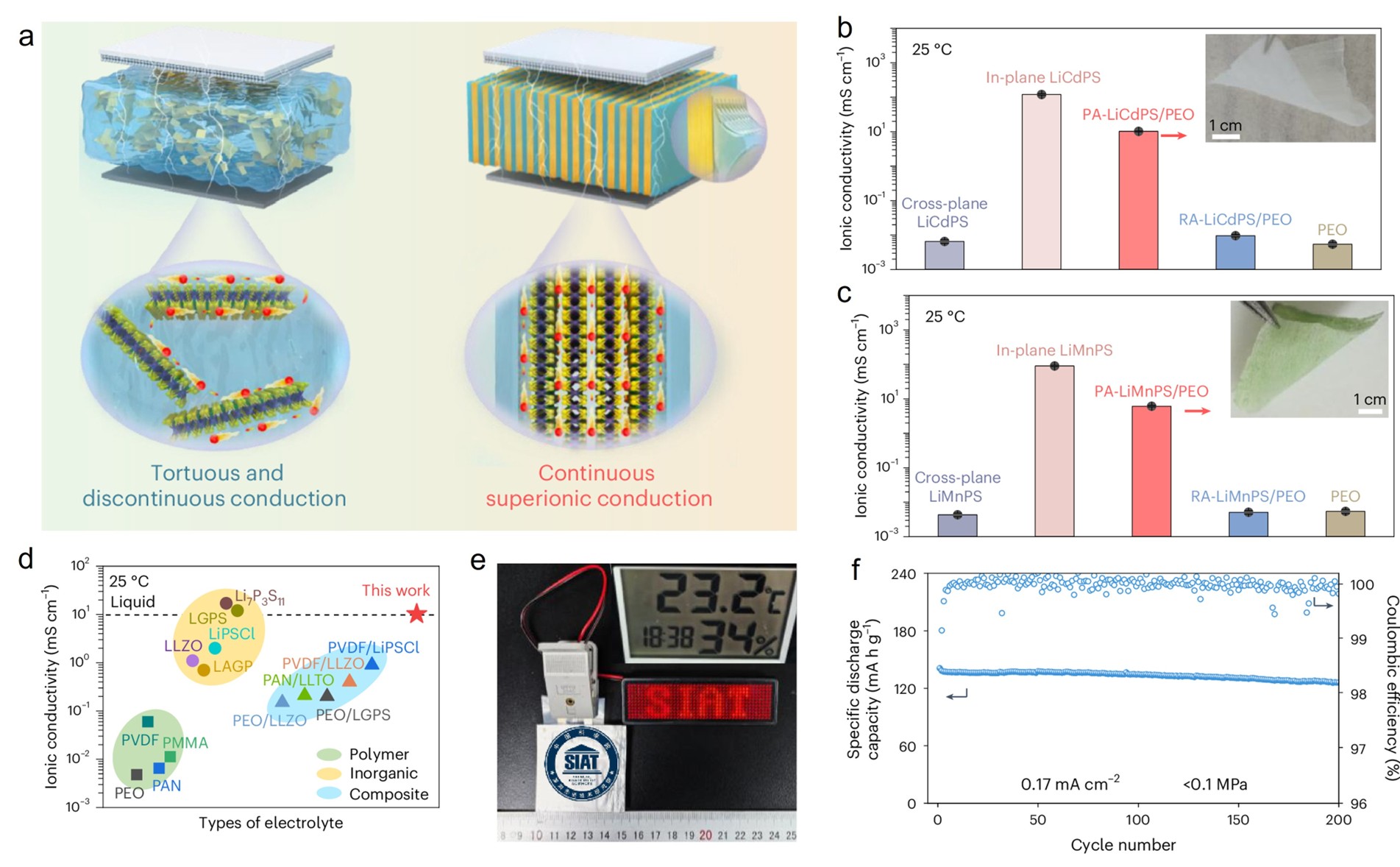
In summary, this work establishes a clear structure–function relationship for solid electrolytes, positioning mesoscale architectural control as a factor equally critical as chemical composition in governing device-level behavior. In addition, this architectural principle extends far beyond lithium battery systems, offering a versatile platform for a wide array of anisotropic 2D materials, such as oxides and metal-organic frameworks, to be integrated into high-performance composites for multivalent-ion batteries and functional membranes. By establishing mesoscale structural control as a universal design degree of freedom, this work paves the way for next-generation high-performance, pressure-less, and scalable electrochemical energy storage devices.


