C.Y. Li ‡, H.J. Jing ‡, H.F. Qi, Z.B. Guo, Y. Ma, Z.C. Xu, T. Azam, H. Wang, X. Wang, Y.L. Tan, J. Long *, B. Zhang *, J.P. Xiao and Z.-S. Wu *
Angewandte Chemie International Edition, 2026, accepted.
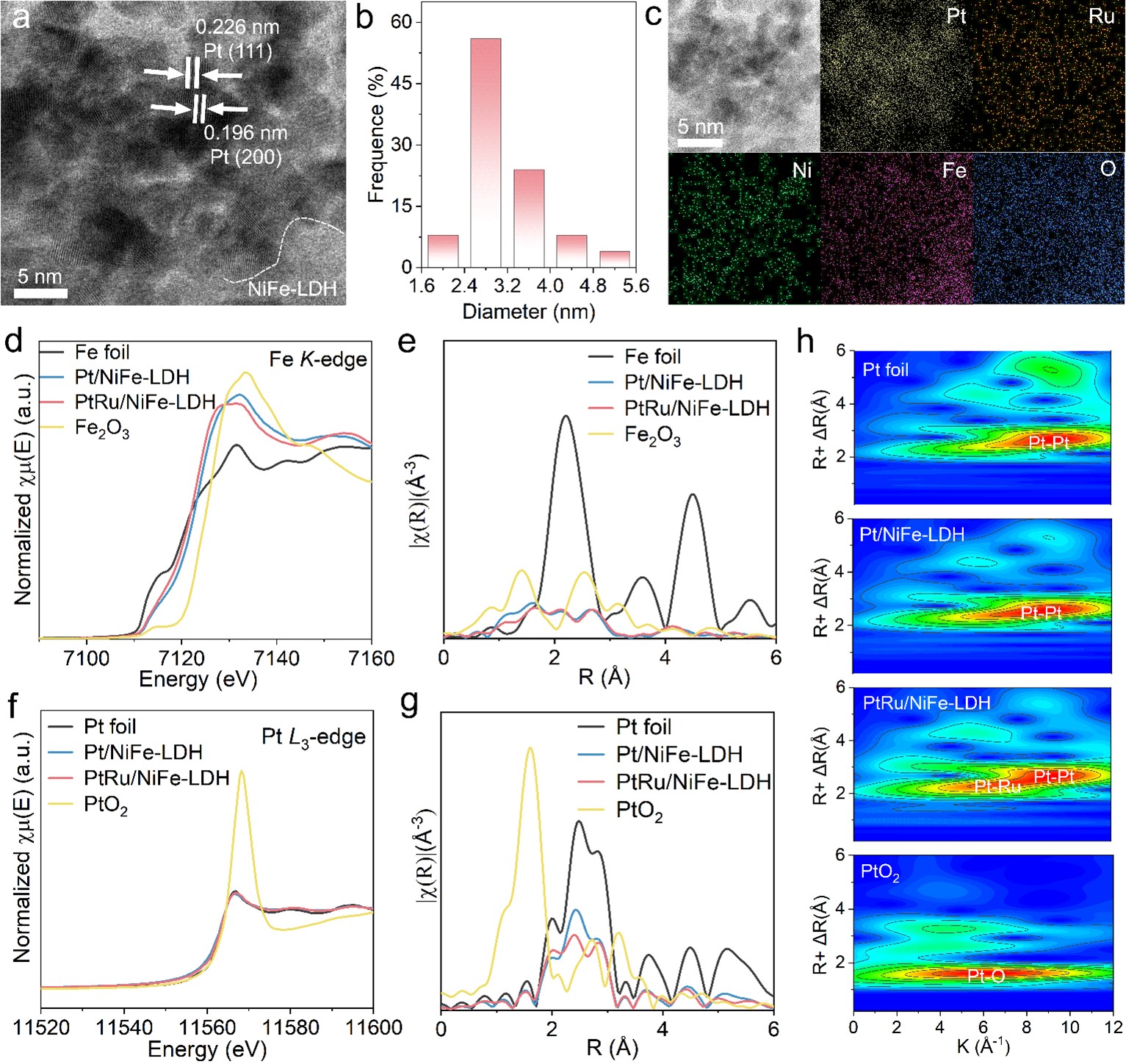
Selective electrooxidation of glycerol to glyceric acid offers a promising route for glycerol valorization but remains hindered by limited activity and stability. Herein, we report a scalable self-corrosion strategy for large-area fabrication of a Ru-doped Pt/NiFe-LDH catalyst on Ni foam (PtRu/NiFe-LDH) with an area of up to 36 cm2. The incorporation of Ru modulates the electronic structure, enhances the adsorption of both OH⁻ and glycerol, and lowers the free energy barrier for OH* formation, thereby significantly boosting catalytic activity to achieve a recorded current density of 439.5 mA cm⁻². Furthermore, pulse electrolysis effectively suppresses the formation of PtOx, ensuring long-term stability. When integrated into a glycerol oxidation-assisted hydrogen evolution system, this bifunctional catalyst reduces the cell voltage by 1.01 V relative to conventional water splitting, while delivering 78.5% selectivity towards glyceric acid and stable operation for over 120 h. This work establishes a viable pathway toward the industrialization of selective electrochemical oxidation of glycerol to glyceric acid by integrating advanced catalyst design with optimized electrolyzer configuration.


