X. Wang, Z.-S. Wu *, X.L. Feng *, P. Simon * and H.-M. Cheng *
2D Materials, 2025, accepted.
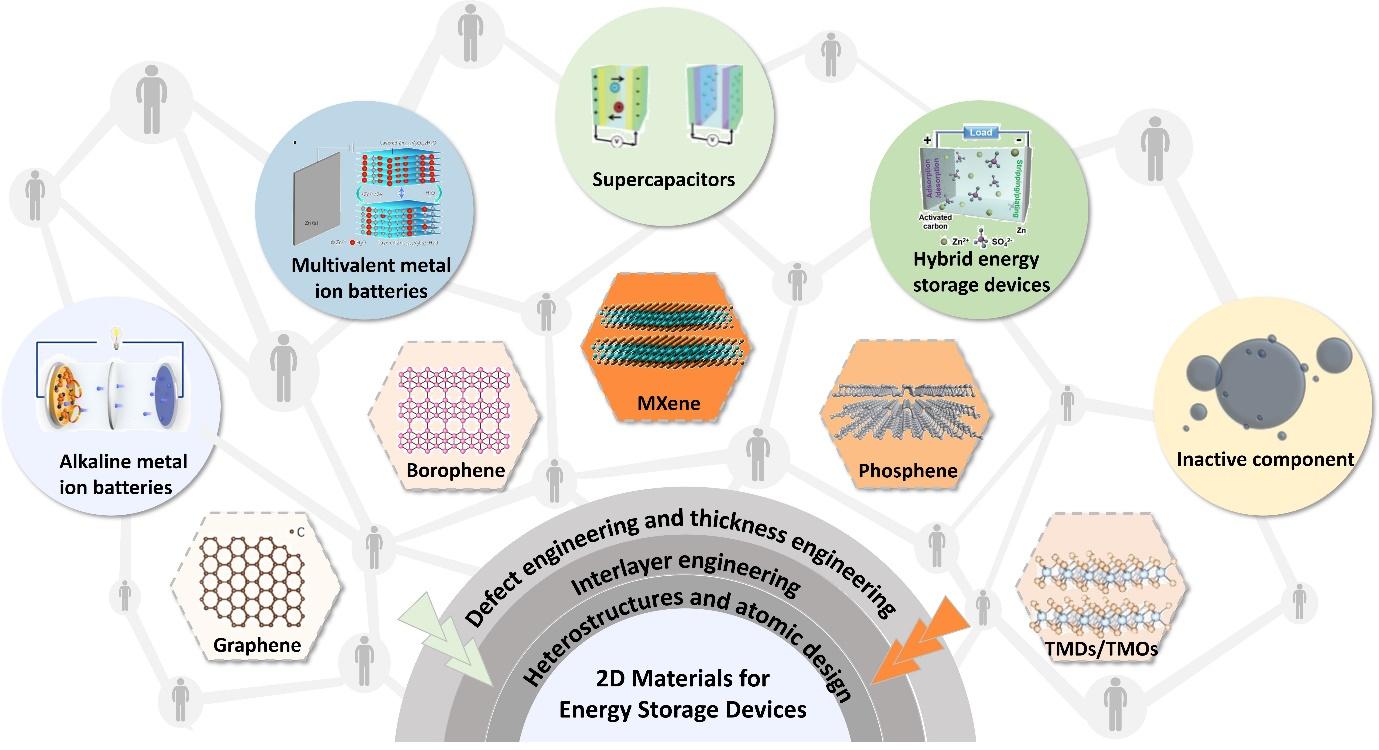
The advent of 2D materials has revolutionized condensed matter physics and materials science, offering unprecedented opportunities to explore exotic physical phenomena, engineer novel functionalities, and address critical technological challenges across diverse fields. Over the past two decades, the exploration of 2D materials has expanded beyond graphene, encompassing a vast library of atomically thin crystals and their heterostructures. These materials exhibit extraordinary electronic, optical, thermal, mechanical, and chemical properties, and hold promise for breakthroughs in electronics, optoelectronics, quantum technologies, energy storage, catalysis, thermal management, filtration and separation, and beyond. Many exciting new physics and phenomena continue to emerge, while select 2D materials, such as graphene, h-BN, and the semiconducting transition metal dichalcogenides (TMDCs), are transitioning from laboratory-scale demonstrations to industrial applications. In this context, a holistic understanding of synthesis, structure-property relationships, integration, and performance optimization is essential. This roadmap reviews the multifaceted challenges and opportunities in 2D materials research, focusing on the synthesis, properties and applications of representative systems including graphene and its derivatives, TMDCs, MXenes as well as their heterostructures and moiré systems.


